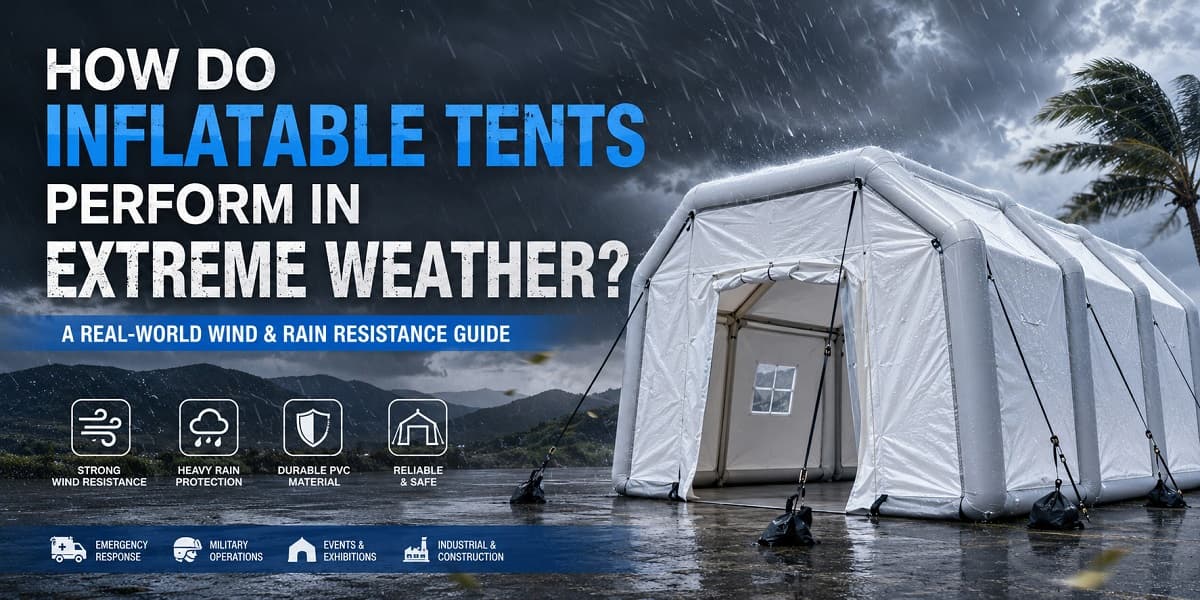
How Do Inflatable Tents Perform in Extreme Weather?
Time:2026-06-02
Pageviews:0
How Do Inflatable Tents Perform in Extreme Weather? A Real-World Wind & Rain Resistance Guide
When planning an outdoor event, emergency response operation, temporary shelter, or commercial exhibition, weather is often the biggest concern. Heavy rain, strong winds, and sudden storms can quickly turn a successful event into a costly challenge.
One of the most common questions we receive from customers is:
"Can inflatable tents really withstand extreme weather?"
The answer is yes—when designed and manufactured correctly, professional-grade inflatable tents can offer outstanding performance in challenging weather conditions. In many situations, they can even outperform traditional frame structures due to their flexible air-supported design.
As a professional manufacturer of PVC inflatable tents, this guide explains how modern inflatable structures handle wind, rain, and harsh outdoor environments.
Understanding the Structure of Inflatable Tents
Unlike traditional tents that rely on metal poles or rigid frames, inflatable tents use air beams or airtight chambers to create structural support.
There are generally two main types:
Continuous-Air Inflatable Tents
These tents use electric blowers to continuously maintain internal pressure. The airflow keeps the structure stable and allows the tent to absorb external forces efficiently.
Sealed Airtight Inflatable Tents
These tents are inflated once and remain pressurized without continuous airflow. High-frequency welding and airtight PVC materials allow them to maintain pressure for extended periods.
Both systems offer unique advantages depending on the application and environmental conditions.
Why Inflatable Tents Handle Wind Better Than Many Traditional Structures
Flexible Structure Absorbs Wind Energy
Traditional metal-framed tents transfer wind pressure directly to rigid components. During strong gusts, stress accumulates at joints and connection points.
Inflatable tents behave differently. Air-filled beams naturally flex and redistribute pressure across the structure. Instead of resisting every force rigidly, the tent absorbs and disperses wind energy, reducing the risk of structural failure.
No Metal Frame Weak Points
Many conventional tents fail because of bent poles, damaged connectors, or broken frame joints. Inflatable tents eliminate many of these vulnerable components, creating a more resilient structure with fewer failure points.
Improved Stability Through Proper Anchoring
Professional inflatable tents are equipped with:
• Heavy-duty anchor points
• Reinforced D-rings
• Ground stakes
• Ballast systems
• Wind-resistant tension straps
When properly secured, inflatable tents can remain stable even under demanding weather conditions.
Rain Resistance: Keeping Occupants Dry and Protected
PVC Tarpaulin Provides Excellent Waterproof Performance
Professional inflatable tents are typically manufactured from commercial-grade PVC-coated polyester fabric.
Key waterproof advantages include:
• Completely waterproof surface
• Heat-sealed seams
• UV-resistant coating
• Mold and mildew resistance
• Easy cleaning and maintenance
Unlike ordinary camping fabrics that may require additional waterproof treatments, PVC tarpaulin naturally provides superior protection against heavy rainfall.
Seam Technology Matters
The quality of seam construction plays a critical role in weather resistance. Professional inflatable tents utilize:
• Hot-air welding
• Heat sealing
• High-frequency welding
These manufacturing techniques create waterproof joints that are significantly stronger than conventional stitched seams.
How PVC Inflatable Tents Perform During Heavy Rain
During prolonged rainfall, several design elements help maintain performance:
High Roof Profiles
Most inflatable event tents feature elevated roof designs that encourage water runoff. Benefits include reduced water pooling, lower structural stress, and improved drainage efficiency.
Tensioned Roof Surfaces
Properly inflated air beams keep the roof surface tight and smooth, minimizing water accumulation, fabric sagging, and rain-induced deformation.
Durable Waterproof Flooring Options
For applications requiring complete weather protection, inflatable tents can also include PVC flooring systems, raised flooring platforms, or integrated waterproof ground sheets to prevent water intrusion from below.
Real-World Wind Resistance Factors
Wind resistance depends on more than tent design alone. Several variables influence performance:
Tent Size – Larger structures experience greater wind loads. Professional engineering ensures proper air beam dimensions, internal pressure requirements, and reinforcement placement.
Installation Quality – Even the strongest inflatable tent requires correct installation: using all anchor points, installing tension straps correctly, following manufacturer guidelines, and performing regular inspections.
Site Conditions – Performance may vary based on open fields, coastal environments, mountain locations, or urban wind tunnels. Site assessment should always be conducted before deployment.
Extreme Weather Applications
Professional inflatable tents are widely used in demanding environments, including:
Emergency Response Shelters – Disaster relief, medical shelters, temporary command centers, humanitarian aid.
Military and Tactical Operations – Field hospitals, equipment storage, operational headquarters, mobile workshops.
Commercial Events and Exhibitions – Fast setup, large covered areas, brand customization, reliable weather resistance.
Industrial and Construction Sites – Protecting personnel, equipment, materials, and temporary operations.
Continuous-Air vs Airtight Tents in Severe Weather
Continuous-Air Inflatable Tents – Advantages: flexibility under wind load, rapid setup, automatic pressure maintenance, suitable for large events. Best for exhibitions, sports events, promotions, temporary commercial installations.
Airtight Inflatable Tents – Advantages: no continuous power requirement, lower operating costs, excellent portability, reliable stability. Best for emergency shelters, military applications, remote locations, long-term deployments.
Best Practices for Operating Inflatable Tents in Extreme Weather
Before Deployment: Check local weather forecasts, inspect tent fabric and seams, verify anchor systems, select stable ground conditions.
During Operation: Monitor wind conditions, maintain proper inflation pressure, ensure drainage remains unobstructed, inspect anchoring systems periodically.
After Severe Weather: Clean and dry the tent thoroughly, inspect welded seams, check air chambers for leaks, store in a dry environment.
Why Material Quality Makes the Difference
Not all inflatable tents are built to the same standard. High-performance tents should use heavy-duty PVC tarpaulin fabric, reinforced internal webbing, commercial-grade welding technology, UV-resistant coatings, and weather-resistant accessories.
At our manufacturing facility, we produce both continuous-air inflatable tents and airtight inflatable tents using premium PVC-coated polyester fabrics engineered for demanding commercial and professional applications. Every project can be customized according to wind resistance requirements, environmental conditions, tent dimensions, branding specifications, and industry-specific applications.
Conclusion
Extreme weather is a reality for many outdoor operations, but modern inflatable tents are designed to meet these challenges. Thanks to their flexible air-supported structures, waterproof PVC materials, reinforced anchoring systems, and advanced welding technology, professional inflatable tents can provide reliable protection against strong winds, heavy rain, and demanding environmental conditions.
Whether you need a promotional event tent, emergency shelter, military structure, industrial workspace, or exhibition pavilion, choosing a professionally engineered PVC inflatable tent can significantly improve safety, efficiency, and operational reliability in challenging weather conditions.
Looking for a custom inflatable tent solution?
Contact our team to discuss your project requirements and discover how our commercial-grade inflatable structures can support your next outdoor application.
Contact WINSUN Tents:
Email: info@winsuntent.com
Website: www.winsuntent.com