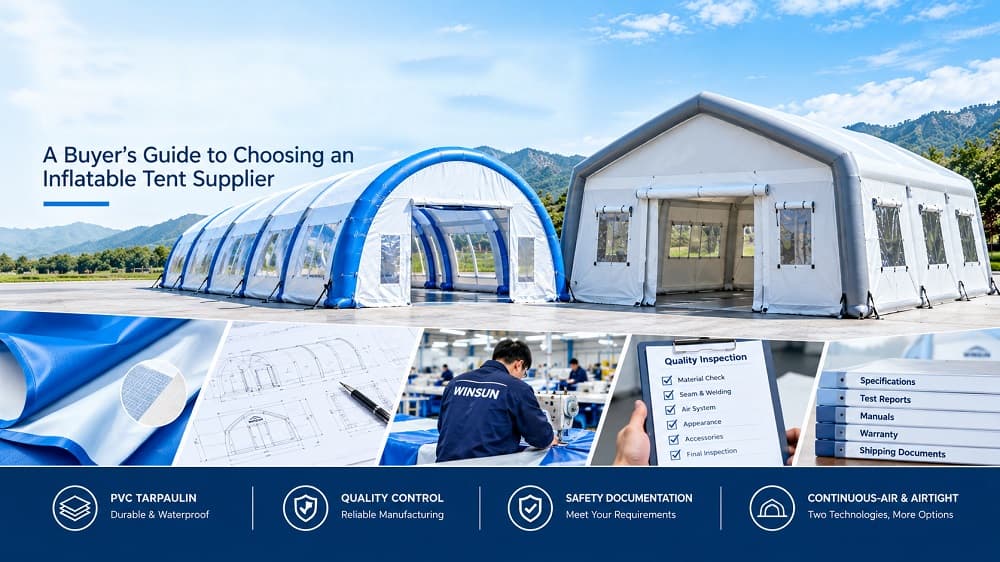
What Documentation Should You Request from an Inflatable Tent Supplier?
Time:2026-10-27
Pageviews:0
When purchasing commercial inflatable tents, reviewing product photos and comparing quotations is only the beginning. Before placing an order, buyers should also understand what documentation the supplier can provide to verify product specifications, manufacturing quality, operating requirements, and delivery commitments.
For event rental companies, exhibition contractors, outdoor activity operators, camping businesses, and organizations purchasing temporary shelters, proper documentation helps reduce misunderstandings and supports more informed purchasing decisions.
This is particularly important for inflatable tents made from PVC tarpaulin, as continuous-air and airtight inflatable tents use different construction methods and have different operating requirements.
So, what documentation should you request from an inflatable tent supplier?
Here are eight important categories to consider before confirming your next order.
1. Product Specification Sheet
A product specification sheet is one of the first documents buyers should request. It establishes exactly what the supplier is offering and provides a reference for production, inspection, delivery, and future maintenance.
For commercial inflatable tents, the specification sheet should include the following information where applicable:
• Product model and product name
• Overall dimensions and structural layout
• Main construction materials
• PVC tarpaulin thickness and material specifications
• Continuous-air or airtight construction type
• Inflation system and operating requirements
• Door, window, ventilation, and access configurations
• Included accessories
• Product weight and packed dimensions, if available
• Intended applications and operating limitations
For customized tents, make sure the specification sheet reflects the final approved design rather than a standard model that only looks similar.
Dimensions, colors, logo placement, openings, and other important details should be confirmed in writing before production begins.
Why it matters: A complete specification sheet reduces the risk of receiving a product that differs from the original quotation or your project requirements.
2. Material Specifications and PVC Tarpaulin Information
PVC tarpaulin is a key component of many commercial inflatable tents. However, simply stating “PVC material” does not provide enough information for a meaningful purchasing decision.
Ask the supplier for available material specifications, which may include:
• PVC tarpaulin thickness
• Material composition and construction
• Fabric weight, where available
• Color and surface finish
• Relevant waterproof or physical performance information
• Applicable material test reports, if required
Material thickness should be considered alongside the tent’s structural design and manufacturing method.
For example, continuous-air inflatable tents commonly use PVC tarpaulin in practical thicknesses up to approximately 0.55–0.6 mm, while airtight inflatable tents may use material up to approximately 0.9 mm, depending on the design and application.
These are practical reference ranges, not universal requirements. The correct specification depends on the particular tent and its intended use.
Buyers should also ask whether the material information relates to the actual material being supplied, rather than a generic specification sheet for a different product.
Why it matters: Clear material documentation makes it easier to compare suppliers on a like-for-like basis and confirm whether the proposed material suits your operating requirements.
3. Construction Drawings and Design Confirmation
For customized inflatable tents, approved drawings are among the most valuable documents in the purchasing process.
A drawing can help both parties confirm the structure before manufacturing begins and identify potential misunderstandings that might otherwise become expensive production changes.
Depending on the project, request drawings showing:
• Overall dimensions and shape
• Entrance and exit positions
• Window locations and sizes
• Internal layout and partitions
• Air chambers or inflation-system arrangements
• Connection points and anchoring locations
• Logo placement and printed graphics
• Special design features
For large or complex structures, additional technical drawings may be necessary to clarify installation requirements and structural details.
Buyers should review the drawings carefully and confirm the final version in writing. Any changes made after approval should be documented so that the buyer and manufacturer are working from the same design.
Not every standard tent requires a detailed engineering package. The documentation should be proportionate to the size, complexity, and intended use of the product.
Why it matters: Approved drawings create a shared reference for production and help ensure that the finished tent matches the agreed design.
4. Quality Inspection and Testing Records
A reliable supplier should be able to explain how product quality is checked before shipment.
Ask what inspection procedures are used and which records can be provided for your particular order.
Depending on the tent design, relevant inspection information may cover:
• Incoming material inspection
• Sewing or heat-welding quality
• Dimensions and appearance
• Valves and inflation accessories
• Inflation and pressure checks
• Air-retention checks for airtight structures
• Accessory and packaging verification
• Final inspection results
For Continuous-Air Inflatable Tents
Continuous-air tents generally use sewn PVC tarpaulin construction and require a blower to maintain internal pressure during operation.
Relevant checks may include seam quality, blower specifications, airflow requirements, inflation performance, and the condition of the completed structure.
For Airtight Inflatable Tents
Airtight tents generally use heat-welded PVC tarpaulin air chambers designed to retain air after inflation.
Relevant checks may include welded seam quality, valve installation, pressure checks, and air-retention testing under specified conditions.
The exact testing procedure should reflect the product’s design. Buyers should not assume that every inflatable tent requires the same test method or acceptance criteria.
For larger orders, it may be appropriate to agree on inspection requirements and acceptance criteria before production begins.
Why it matters: Inspection records provide evidence of the checks performed and help establish clear expectations for product acceptance.
5. Applicable Safety Standards and Certification Documents
Safety documentation deserves particular attention when inflatable tents are intended for public events, commercial venues, camping operations, emergency use, or other regulated applications.
However, there is no single certification that automatically applies to every inflatable tent in every market.
The relevant requirements depend on factors such as the product’s design, intended use, installation environment, destination country, and local regulations.
Before ordering, identify which standards or documents your project actually requires.
Depending on the application, you may need to ask about:
• Applicable product safety standards
• Relevant material test reports
• Fire-performance documentation, where required
• Electrical documentation for supplied blowers or other electrical components
• Structural or engineering documentation, where applicable
• Installation and operating instructions
• Risk assessments or supporting technical documents required by the project
If the supplier claims compliance with a particular standard, request the relevant report or certificate and check that its scope matches the product being purchased.
Pay attention to the issuing organization, product identification, test scope, date, and any limitations stated in the document.
A general company certificate does not necessarily demonstrate that a specific inflatable tent has been tested or certified to a particular product standard.
Why it matters: Verifying applicable documentation before production can help avoid compliance problems, shipment delays, or difficulties obtaining approval for the intended installation.
6. Installation, Operation, and Maintenance Manuals
Even a well-manufactured inflatable tent needs to be installed, operated, inspected, and stored correctly.
Request clear instructions covering the product’s actual operating requirements.
A suitable manual may include:
• Site preparation
• Unpacking and deployment
• Inflation or blower connection
• Required power supply, where applicable
• Anchoring and ground-fixing procedures
• Pressure monitoring, where applicable
• Weather limitations
• Safe occupancy and access guidance, where relevant
• Cleaning and drying
• Deflation and packing
• Storage conditions
• Routine inspection and maintenance
• Repair recommendations
Continuous-Air Tents: Operating Information
For continuous-air tents, buyers should confirm blower requirements, power specifications, airflow arrangements, and the procedures to follow if the blower stops operating.
The supplier should also explain the appropriate anchoring method and the conditions under which the tent must not be used.
Airtight Tents: Air-Retention Information
For airtight tents, buyers should understand the inflation procedure, required pressure range where specified, valve operation, pressure inspection, and appropriate responses to pressure loss.
Air retention does not eliminate the need for inspection or maintenance.
Why it matters: Clear operating instructions help staff deploy the product correctly, maintain it appropriately, and reduce avoidable operating problems.
7. Warranty Terms, Repair Information, and After-Sales Support
A commercial inflatable tent may be used repeatedly over an extended period. Buyers should therefore clarify the supplier’s after-sales arrangements before confirming an order.
Ask for written information about:
• Warranty duration and coverage
• Exclusions and conditions
• Procedures for reporting defects
• Repair recommendations
• Availability of repair materials
• Replacement valves, blowers, or other applicable components
• Technical support procedures
• Responsibility for shipping replacement parts, where relevant
The warranty should clearly state what is covered and what the customer must do if a problem occurs.
Buyers should also ask whether repair guidance is available for the specific construction type. Repair methods for sewn continuous-air structures may differ from those required for heat-welded airtight chambers.
If the tent is part of a rental fleet or a time-sensitive event operation, it is particularly important to understand how technical issues will be handled.
Why it matters: Written warranty and service terms make expectations clearer and help buyers plan for maintenance and potential downtime.
8. Commercial Documents: Quotation, Purchase Order, and Shipping Records
Technical documentation is only part of the purchasing process. Commercial documents are equally important for confirming what has been ordered, what will be delivered, and which costs and responsibilities apply.
Before making a payment, review the following documents as appropriate.
Quotation and Proforma Invoice
Confirm the product model, dimensions, materials, quantity, customization, included accessories, unit price, total price, payment terms, and quotation validity.
Make sure the quotation identifies any items that are excluded from the price.
Approved Order Specification
For customized products, maintain a written record of the final design, materials, colors, printing, accessories, and agreed delivery requirements.
Production and Delivery Schedule
Ask the supplier to confirm the expected production lead time and planned shipping arrangements.
If your project has a fixed opening date or event deadline, communicate it before placing the order and obtain written confirmation of the agreed schedule.
Packing List and Shipping Documents
Depending on the shipping arrangement, relevant documents may include a packing list, commercial invoice, bill of lading or air waybill, and other documents required for customs clearance or import compliance.
The exact documents depend on the destination country, transport method, and agreed shipping terms.
Why it matters: Clear commercial records help prevent disputes over specifications, quantities, costs, delivery dates, and shipping responsibilities.
A Practical Documentation Checklist for Inflatable Tent Buyers
Before confirming your order, use this checklist to identify the documents most relevant to your project.
• [ ] Product specification sheet
• [ ] PVC tarpaulin material specifications
• [ ] Final approved drawings for customized products
• [ ] Quality inspection and relevant test records
• [ ] Applicable safety or compliance documentation
• [ ] Installation, operating, and maintenance instructions
• [ ] Written warranty and after-sales terms
• [ ] Quotation or proforma invoice
• [ ] Confirmed order specifications and delivery schedule
• [ ] Packing and shipping documents, as applicable
Not every purchase requires every document listed above. A small standard tent and a large custom commercial pavilion may have very different documentation needs.
The key is to identify your requirements early and agree with the supplier on what will be provided before production begins.
Questions to Ask Before Requesting Documentation
To obtain useful documents rather than a collection of generic files, buyers should first explain their project requirements.
Consider asking the supplier:
1. What will the tent be used for?
Explain whether it is intended for events, exhibitions, camping, outdoor activities, emergency shelter, or another application.
2. Where will the tent be installed?
The destination market, site conditions, weather exposure, and local requirements may affect the necessary documentation.
3. Which construction type is required?
Confirm whether you need a continuous-air tent or an airtight tent, as this affects material selection, manufacturing methods, and operating instructions.
4. Is the product standard or customized?
Customized structures may require approved drawings, additional specifications, and more detailed confirmation before production.
5. Are there specific compliance requirements?
If a venue, customer, regulator, or project owner requires a particular standard or document, communicate the exact requirement before requesting a quotation.
Providing this information helps the supplier identify the relevant documentation and reduces unnecessary back-and-forth communication.
WINSUN: Professional PVC Inflatable Tent Manufacturing
As a professional inflatable tent manufacturer, WINSUN specializes in PVC tarpaulin inflatable tent solutions for commercial and professional applications.
Our product range includes both continuous-air and airtight inflatable tents, each using a construction method suited to its design and operating requirements.
Continuous-Air Inflatable Tents
These tents generally feature sewn PVC tarpaulin construction and a continuous air supply. Buyers should pay particular attention to blower specifications, installation procedures, seam quality, and operating requirements.
Airtight Inflatable Tents
These tents generally feature heat-welded PVC tarpaulin air chambers designed to retain air after inflation. Relevant considerations include material specifications, welded construction, valve details, air-retention checks, and pressure-management instructions.
Custom Manufacturing and Project Support
For customized projects, clear communication and accurate documentation are essential. Product dimensions, material specifications, printing, configurations, accessories, and other requirements should be confirmed before production.
WINSUN works with customers to develop inflatable tent solutions based on their applications and project requirements. The appropriate product documentation can be discussed and confirmed according to the product design, destination market, and purchasing needs.
Our approach is straightforward: clear specifications, suitable construction methods, defined requirements, and professional communication throughout the order process.
Final Thoughts: Request the Right Documents Before You Order
Choosing an inflatable tent supplier should involve more than comparing prices and reviewing product photographs.
The right documentation helps you understand what you are buying, verify the agreed specifications, prepare for installation, evaluate applicable compliance requirements, and establish clear expectations for quality and after-sales support.
Before placing your next order, take the time to identify which documents are essential for your project and confirm their availability with the manufacturer.
A reliable supplier should be able to explain its product clearly, provide relevant documentation, and help you understand the requirements for using the tent correctly.
WINSUN — Professional PVC Inflatable Tent Manufacturer
Continuous-Air & Airtight | PVC Tarpaulin | OEM & ODM | Custom Solutions
Contact WINSUN to discuss your commercial inflatable tent project and confirm the specifications and documentation relevant to your application.
Consultation Inquiries:
Email: Info@winsuntent.com
Website: www.winsuntent.com