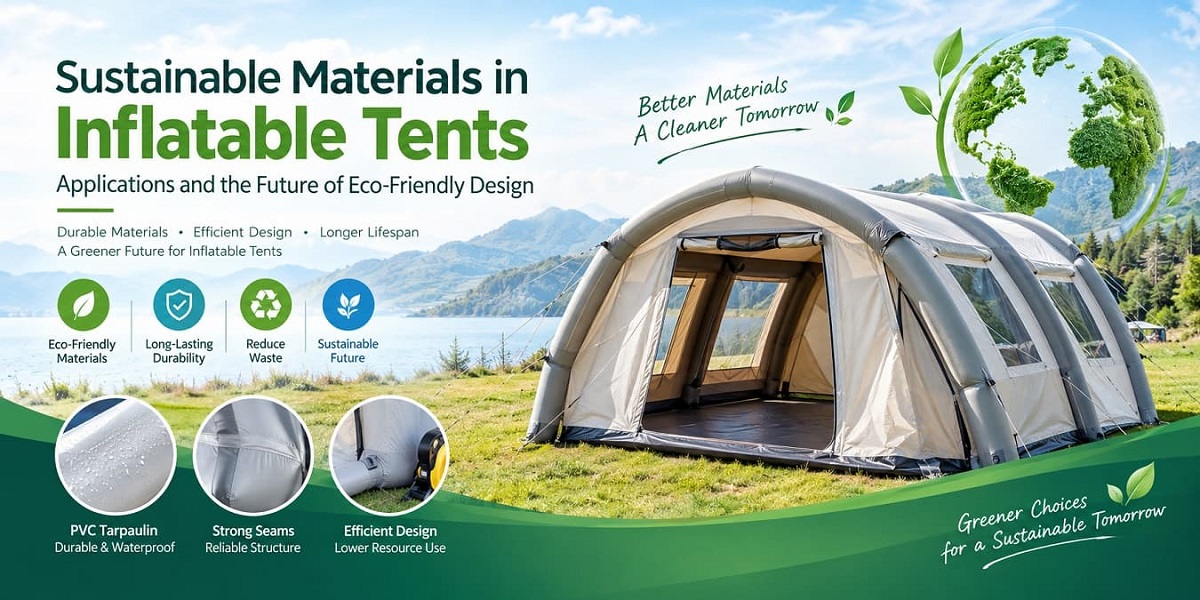
Sustainable Materials in Inflatable Tents: Applications and the Future of Eco-Friendly Design
Time:2026-09-08
Pageviews:0
As environmental awareness continues to grow worldwide, sustainability has become an increasingly important consideration in the design and manufacturing of outdoor products. From temporary event structures and camping equipment to commercial shelters, customers are paying greater attention to material durability, product lifespan, manufacturing efficiency, and end-of-life environmental impact.
Inflatable tents are no exception.
As a professional supplier of inflatable tent solutions, WINSUN specializes in both continuous-inflation inflatable tents and airtight inflatable tents manufactured primarily with durable PVC tarpaulin materials. While PVC tarpaulin remains an important material for commercial inflatable structures because of its strength, waterproof performance, and long service life, the future of the industry is moving toward more responsible material selection, improved production efficiency, longer product lifecycles, and reduced material waste.
This article explores how sustainable thinking can be applied to inflatable tent design and what environmental directions may shape the future of the industry.
1. Why Sustainability Matters in the Inflatable Tent Industry
Traditional tents and temporary structures often require large quantities of rigid frames, metal components, connectors, and separate fabric covers. Inflatable tents offer a different structural solution by using air as an essential part of their supporting system.
This design can potentially reduce the number of rigid structural components required while providing advantages such as:
• Fast installation and dismantling
• Compact transportation and storage
• Reusable construction
• Reduced reliance on heavy structural frames
• Flexible designs for different applications
• Long-term use with proper maintenance
However, sustainability should not be defined simply by whether a product uses a material described as "green" or "eco-friendly."
For commercial inflatable tents, a more practical approach considers the entire product lifecycle:
Material selection → Manufacturing → Transportation → Service life → Repair → Reuse → End-of-life treatment
A tent that lasts for many years, can be repaired when damaged, and is repeatedly used for commercial applications may offer significant environmental advantages compared with a short-life product that requires frequent replacement.
Therefore, durability and sustainability are closely connected.
2. PVC Tarpaulin: A Practical Material for Durable Inflatable Tents
PVC tarpaulin is currently one of the most widely used materials in the commercial inflatable industry.
For WINSUN inflatable tent products, PVC tarpaulin provides a combination of properties that are particularly suitable for demanding outdoor and commercial applications.
Key advantages include:
• Excellent waterproof performance
• Good tear resistance
• High tensile strength
• Suitable flexibility for inflatable structures
• Resistance to frequent folding and transportation
• Easy cleaning and maintenance
• Compatibility with sewing and high-frequency welding processes
• Long service life when properly maintained
Material durability is an important part of responsible product design.
A lightweight material may reduce the amount of raw material used during manufacturing, but if it significantly shortens the useful life of the tent, the product may need to be replaced more frequently. For commercial users, such as event companies, rental businesses, outdoor operators, and emergency service organizations, long-term reliability is often essential
For this reason, selecting the appropriate material thickness and structure for the intended application is more important than simply choosing the thinnest or lightest possible material.
3. Continuous-Inflation Tents and Efficient Material Use
Continuous-inflation tents are designed to operate with an electric blower that continuously supplies air during use.
These products are commonly manufactured using approximately 0.55–0.60 mm PVC tarpaulin, depending on the specific product design and application.
Sustainable design considerations for continuous-inflation tents include:
Appropriate Material Thickness
Using excessively thick material is not always the best solution. A carefully designed structure using the appropriate PVC tarpaulin thickness can provide reliable performance while avoiding unnecessary material consumption.
For many continuous-inflation tent applications, PVC tarpaulin in the 0.55–0.60 mm range provides an effective balance between:
• Structural durability
• Product weight
• Portability
• Manufacturing efficiency
• Long-term usability
Modular and Repairable Construction
Damaged sections, accessories, or components can often be repaired or replaced rather than requiring the entire tent to be discarded.
Common maintenance and repair solutions may include:
• PVC repair patches
• Reinforcement of damaged seams
• Replacement of accessories
• Blower replacement
• Repair of air leakage areas
Extending the useful life of a product is one of the most practical ways to reduce the environmental impact associated with frequent replacement.
4. Airtight Inflatable Tents and Long-Term Reusability
Unlike continuous-inflation models, airtight inflatable tents are designed with sealed air chambers and generally do not require continuous operation of an electric blower after inflation.
These structures typically use heavier-duty materials and advanced welding technology to maintain air pressure within the inflatable frame.
For commercial airtight products, approximately 0.9 mm PVC tarpaulin is commonly used for the inflatable structure, depending on the design and performance requirements.
Advantages of Airtight Tent Construction
Airtight inflatable tents can offer several sustainability-related advantages:
• No continuous blower operation during normal use
• Reduced operational energy requirements after inflation
• Durable airtight structures designed for repeated use
• Long-term commercial applications
• Compact storage after deflation
• Reusable structural systems
The manufacturing process is equally important.
Airtight inflatable structures generally require carefully controlled welding processes to create strong and reliable seams. High-quality construction can reduce air leakage, minimize repair requirements, and help extend the operational lifespan of the product.
A longer-lasting inflatable structure can reduce the need for frequent replacement and contribute to more efficient resource use over time.
5. Durability Is an Important Part of Sustainability
One of the most overlooked aspects of sustainable product design is durability.
For commercial inflatable tents, a product may experience:
• Frequent installation and dismantling
• Repeated folding and transportation
• Outdoor weather exposure
• High and low temperature environments
• Continuous use during events
• Rental and commercial operation
A product designed for only a short period of use may consume fewer resources initially, but frequent replacement can result in greater long-term material consumption.
Therefore, sustainable inflatable tent design should focus on achieving a balance between:
Lightweight Design
Reducing unnecessary product weight can help improve transportation efficiency.
Structural Reliability
The tent must remain strong enough for its intended application.
Long Service Life
A durable product can be reused repeatedly over many years.
Repairability
Minor damage should not automatically result in product disposal.
This approach is particularly important for commercial customers who expect inflatable tents to provide long-term operational value.
6. Reducing Material Waste Through Better Product Design
Material waste can often be reduced before production even begins.
Modern inflatable tent design increasingly relies on careful structural planning and digital production processes to improve material efficiency.
Design optimization can include:
• Accurate material cutting plans
• Efficient panel layouts
• Reduction of unnecessary material overlap
• Appropriate reinforcement placement
• Optimized inflatable chamber design
• Modular product structures
The goal is not simply to use less material.
Instead, manufacturers should focus on using the right amount of material in the right location.
For example, high-stress areas may require additional reinforcement, while other areas may not require excessive material thickness. A well-designed inflatable tent distributes material according to structural requirements.
This can improve both product performance and manufacturing efficiency.
7. Repair, Maintenance and Product Life Extension
A sustainable product should be designed for long-term use rather than disposal.
Commercial inflatable tents can often remain in service for extended periods when they are properly maintained.
Recommended maintenance practices include:
• Cleaning the tent after use
• Keeping the product dry before storage
• Avoiding sharp objects during installation
• Inspecting seams and stress points regularly
• Repairing minor damage promptly
• Using appropriate storage conditions
• Following the manufacturer's installation instructions
Repairability is particularly important for PVC tarpaulin products.
Small holes or damaged areas can often be repaired using appropriate repair materials and professional techniques. By repairing a damaged area early, users may prevent a minor problem from developing into more serious structural damage.
This helps extend product life and reduces unnecessary waste.
8. Sustainable Manufacturing Begins With Quality Control
Environmental responsibility is not limited to the materials used in a finished product.
Manufacturing quality also plays an important role.
A poorly manufactured inflatable tent may fail prematurely, requiring repair or replacement much earlier than expected. Strong quality management can help reduce this problem.
Important manufacturing considerations include:
Material Inspection
Checking PVC tarpaulin quality before production helps ensure consistent performance.
Accurate Cutting
Precision cutting can reduce unnecessary material waste.
Professional Sewing or Welding
Strong seams are essential for both continuous-inflation and airtight structures.
Reinforcement in Critical Areas
Additional reinforcement should be applied where stress levels are higher.
Air Leakage Testing
Airtight products should undergo appropriate testing before delivery.
Final Quality Inspection
Inspecting the finished tent before shipment helps reduce product defects and unnecessary replacement.
By improving product quality from the beginning, manufacturers can help increase the usable lifespan of inflatable products.
9. Transportation Efficiency and Inflatable Tent Design
Compared with many traditional rigid structures, inflatable tents can be deflated and packed for transportation.
This compact form can provide important logistical advantages.
A deflated inflatable tent generally requires less storage space than a fully assembled rigid-frame structure of a similar size. This can help improve:
• Container loading efficiency
• Warehouse storage efficiency
• Transportation convenience
• Event installation logistics
For companies operating inflatable tent rental businesses or organizing frequent events, the ability to repeatedly transport and reuse the same tent is an important advantage.
However, transportation sustainability also depends on product weight and packaging efficiency.
Manufacturers can contribute by optimizing product structures and avoiding unnecessary packaging materials while still ensuring adequate protection during international transportation.
10. The Future of Sustainable Inflatable Tent Materials
The inflatable industry continues to explore new materials and manufacturing technologies.
Future environmental development may focus on several important directions.
10.1 Improved Material Formulations
Material suppliers may continue developing PVC-based fabrics with improved environmental characteristics while maintaining the durability required for commercial inflatable products.
The challenge will be finding solutions that maintain:
• Waterproof performance
• Tensile strength
• Tear resistance
• UV resistance
• Flexibility
• Long service life
For commercial applications, environmental improvements must not come at the expense of essential safety and durability.
10.2 Recycled and Lower-Impact Materials
The development of recycled-content materials and lower-impact textile technologies may provide new opportunities for inflatable products in the future.
However, these materials must be carefully evaluated before being used for commercial inflatable tents.
Important considerations include:
• Long-term structural performance
• Air retention
• Weather resistance
• Welding or sewing compatibility
• Fire-retardant performance
• Product lifespan
Material innovation should be supported by practical performance testing rather than environmental claims alone.
10.3 More Efficient Manufacturing Technology
Advanced manufacturing technologies can help reduce waste and improve production consistency.
Potential improvements include:
• Digital pattern design
• Automated cutting systems
• Improved welding technology
• More efficient material layout
• Reduced production errors
• Better quality monitoring
Higher manufacturing accuracy can help reduce wasted materials while improving the consistency of finished inflatable products.
10.4 Longer Product Lifecycles
In the future, manufacturers may increasingly focus on designing products that can remain in service longer.
This may include:
• Replaceable components
• Improved repair solutions
• Modular structures
• Standardized accessories
• Better maintenance guidance
A longer product lifecycle can significantly improve the overall sustainability of commercial inflatable equipment.
11. WINSUN's Approach to Responsible Inflatable Tent Manufacturing
As a professional inflatable tent supplier, WINSUN understands that sustainability must be combined with practical product performance.
Our product range includes both:
Continuous-Inflation Inflatable Tents
Typically designed using durable 0.55–0.60 mm PVC tarpaulin and supported by continuous airflow during operation.
Airtight Inflatable Tents
Designed with sealed inflatable structures, typically using approximately 0.9 mm PVC tarpaulin for demanding airtight applications.
Our approach focuses on several important principles:
• Selecting suitable materials for different tent structures
• Avoiding unnecessary material thickness
• Improving structural durability
• Supporting long-term product use
• Providing repairable product solutions
• Reducing avoidable production waste
• Optimizing packaging and transportation efficiency
• Developing products according to real commercial requirements
We believe that a responsible inflatable product should not only perform well when new—it should also provide reliable value throughout its usable life.
12. Sustainability Is About the Entire Product Lifecycle
There is no single material or manufacturing method that can solve every environmental challenge.
For commercial inflatable tents, true sustainability requires a broader perspective.
The most effective approach considers:
Durable Materials + Efficient Design + Quality Manufacturing + Repeated Use + Proper Maintenance + Repairability + Responsible End-of-Life Management
PVC tarpaulin remains an important material for commercial inflatable tent manufacturing because of its strength, waterproof capabilities, and long-term durability. At the same time, the industry should continue exploring improved materials, more efficient production methods, and better solutions for product recycling and reuse.
The future of sustainable inflatable tents will not be defined by one simple material label.
Instead, it will depend on how effectively manufacturers can balance performance, durability, resource efficiency, safety, and environmental responsibility.
Looking Ahead: A More Sustainable Inflatable Tent Industry
As demand for temporary outdoor structures, event tents, camping shelters, and commercial inflatable spaces continues to grow, sustainability will become an increasingly important part of product development.
The next generation of inflatable tents will likely be:
• More durable
• More material-efficient
• Easier to repair
• More reusable
• Easier to transport
• Better designed for long-term operation
• Manufactured with increasingly responsible production technologies
For professional buyers, choosing a high-quality inflatable tent is not only an investment in performance—it can also be an investment in a longer and more responsible product lifecycle.
At WINSUN, we will continue to focus on developing reliable continuous-inflation and airtight inflatable tent solutions while exploring practical ways to improve material efficiency, product durability, and sustainable manufacturing practices.
A longer-lasting inflatable tent is not only better for business—it is also an important step toward reducing unnecessary resource consumption.
About WINSUN Tents:
WINSUN Tents combines 19+ years of PVC manufacturing expertise with innovative inflatable engineering to deliver premium temporary structures for clients worldwide. From advertising tents to emergency shelters, we build solutions that outperform expectations.
Consultation Inquiries:
Email: Info@winsuntent.com
Website: www.winsuntent.com